Well, what do we have here? A release review? A compilation album, perhaps? Yup, that's exactly what it's about. A little change of pace here and there and honestly, it wouldn’t hurt to shed some light on something this obscure.
In the middle of internet deep hole digging (using various tools for google searches etc.), i found myself an online zine mentioning one band that played emocore and their music can only be heard on this compilation. I was intrigued by this so i had to see if i can find a way to get this on my hands and voila! Found a copy on Kupindo.com. It now proudly sits on my shelf and is on my "to-play-on-car-radio" list.
"KOMPILACIJA BRODSKIH BENDOVA" contains demo songs from local bands Faak Am See, Faul, Kriva Istina and Lotus - formed in Slavonski Brod, Croatia. All except Faul recorded in the Firov Kraj 43 studio. The compilation was released in 2003 and it's marked as the bands' starting point. Almost each band shares its members. Faul formed a little earlier before FAS and KI. Later on, FAS and KI would make a split together in 2006. To this day, only Kriva Istina remains as the longest running active band in the Croatian punk scene. The entire comp lasted for only thirty minutes.
Starting off with a South Park sample, FAAK AM SEE kicks off with their fast, brief and raw hardcore punk with three songs for a 5 minute runtime. Following FAUL whose energetic melodic hardcore elements pave their way for seven plus minutes and KRIVA ISTINA following Faul's footsteps, albeit in a more brooding way for eight more minutes.
Then lastly, we're having a change of pace with LOTUS here. This right here belongs to the slow-burning 90's emocore vibe, featuring Tijana on vocals and a different drummer. Quiet/loud dynamics and some passionate clean singing and shouting here and there. Sort of bordering between Directed Crew, Analena and Eldritsch Anisette. Raw and promising. It's definitely a treasure worth finding.
----
Pa šta imamo ovde? Recenziju izdanja? Kompilaciju, možda? Pa, upravo to. Malo promene ritma tu i tamo, i iskreno, ne bi škodilo da se osvetli nešto ovako opskurno.
Kopajući po internetu (koristeći razne alate za pretragu), naleteo sam na online fanzin koji je pomenuo jedan bend koji je svirao emocore, a njihova muzika se može čuti jedino na ovoj kompilaciji. Intrigirano, morao/la sam da vidim da li mogu da dođem do nje i evo ga! Našao sam primerak na Kupindo.com. Sada ponosno stoji na mojoj polici i na listi “za puštanje u kolima”.
KOMPILACIJA BRODSKIH BENDOVA sadrži demo pesme lokalnih bendova Faak Am See, Faul, Kriva Istina i Lotus — svi iz Slavonskog Broda. Sve osim Faula snimljene su u studiju Firov Kraj 43. Kompilacija je objavljena 2003. i označava početak ovih bendova. Skoro svi članovi su svirali jedni s drugima. Faul je nastao nešto ranije nego FAS i KI, a kasnije su FAS i KI izdali split 2006. Danas, jedino Kriva Istina ostaje najdugovečniji aktivni bend na hrvatskoj punk sceni. Kompilacija traje oko 30 minuta.
Počinje South Park semplom — FAAK AM SEE startuje brzo, kratko i sirovo hardcore punkom kroz tri pesme od ukupno 5 minuta. Sledi FAUL sa energičnim melodic hardcore pristupom od preko 7 minuta, pa KRIVA ISTINA koja ide stopama Faula, ali malo mračnijim tonom, još 8 minuta.
Na kraju imamo promenu tempa sa LOTUS. Ovo je onaj polako-tinajući 90’s emocore zvuk, sa Tijanom na vokalu i drugim bubnjarom. Quiet/loud dinamika, malo strastvenog čistog pevanja i vikanja. Negde između Directed Crew, Analene i Eldritsch Anisette. Sirovo i obećavajuće. Pravi dragulj za pronaći.
Related bands: Clean, Counterfit, Don't Mess With Texas, Lunar, Minimum System Requirements, Nikad, Radio Free Isaac, Razlog za, Senata Fox
FFO: Farside, Quicksand, Shift, Shutter To Think
Latest was a short-lived post-hardcore band from Zagreb, Croatia, active between 1999 and 2000. Featuring members of key local acts like Clean, Nikad, and Don’t Mess With Texas, the project was a brief but deliberate homage to the mid-'90s wave of emotive post-hardcore, echoing the sounds of Dischord Records, Quicksand, and Farside, with a touch of alt-rock melody.
After playing a handful of shows, they released their sole EP Platform Shoes, initially as a promotional CD, and later on cassette through Čakovec’s DIY label Lifeline Records.
To be blunt: it’s solid, it flows well, but it’s not exactly game-changing. It sounds like what it is, friends from other bands trying something new before disappearing into other projects. The production is clean, the songs are listenable, and while nothing really jumps out, it’s the kind of EP you put on during a slow afternoon when you’re tired of everything else.
It's not legendary, it’s not forgotten, it’s just there. And sometimes, that’s fine.
------
Latest je bio kratkotrajni post-hardcore bend iz Zagreba, Hrvatska, aktivan između 1999. i 2000. godine. U sastavu su bili članovi ključnih lokalnih bendova poput Clean, Nikad i Don’t Mess With Texas, a projekat je predstavljao kratak, ali promišljen omaž talasu emotivnog post-hardcora sredinom devedesetih, uz zvučne odjeke izdavačke kuće Dischord Records, bendova Quicksand i Farside, te sa dozom alt-rock melodije.
Nakon nekoliko odsviranih koncerata, izdali su svoj jedini EP Platform Shoes, prvo kao promotivni CD, a kasnije i na kaseti preko čakovečkog DIY labela Lifeline Records.
Da budemo direktni: solidno je, teče glatko, ali nije ništa revolucionarno. Zvuči tačno onako kako jeste — prijatelji iz drugih bendova koji su htjeli isprobati nešto novo prije nego što su se razišli u druge projekte. Produkcija je čista, pjesme se lako slušaju, a iako se ništa posebno ne izdvaja, to je onaj tip EP-ja koji pustiš tokom sporog poslijepodneva, kad ti je svega drugog preko glave.
Nije legendarno, nije ni zaboravljeno — jednostavno postoji. I ponekad, to je sasvim dovoljno.
PROMOTIONAL CD
LIFELINE'S TAPE VERSION
Thanks for Igor of GuranjeSLitice for uploading the full EP.
FFO: Rolo Tomassi, Naked City, Me and Him Call It Us, Mara'akate, Rep Seki, Usurp Synapse, Honeywell
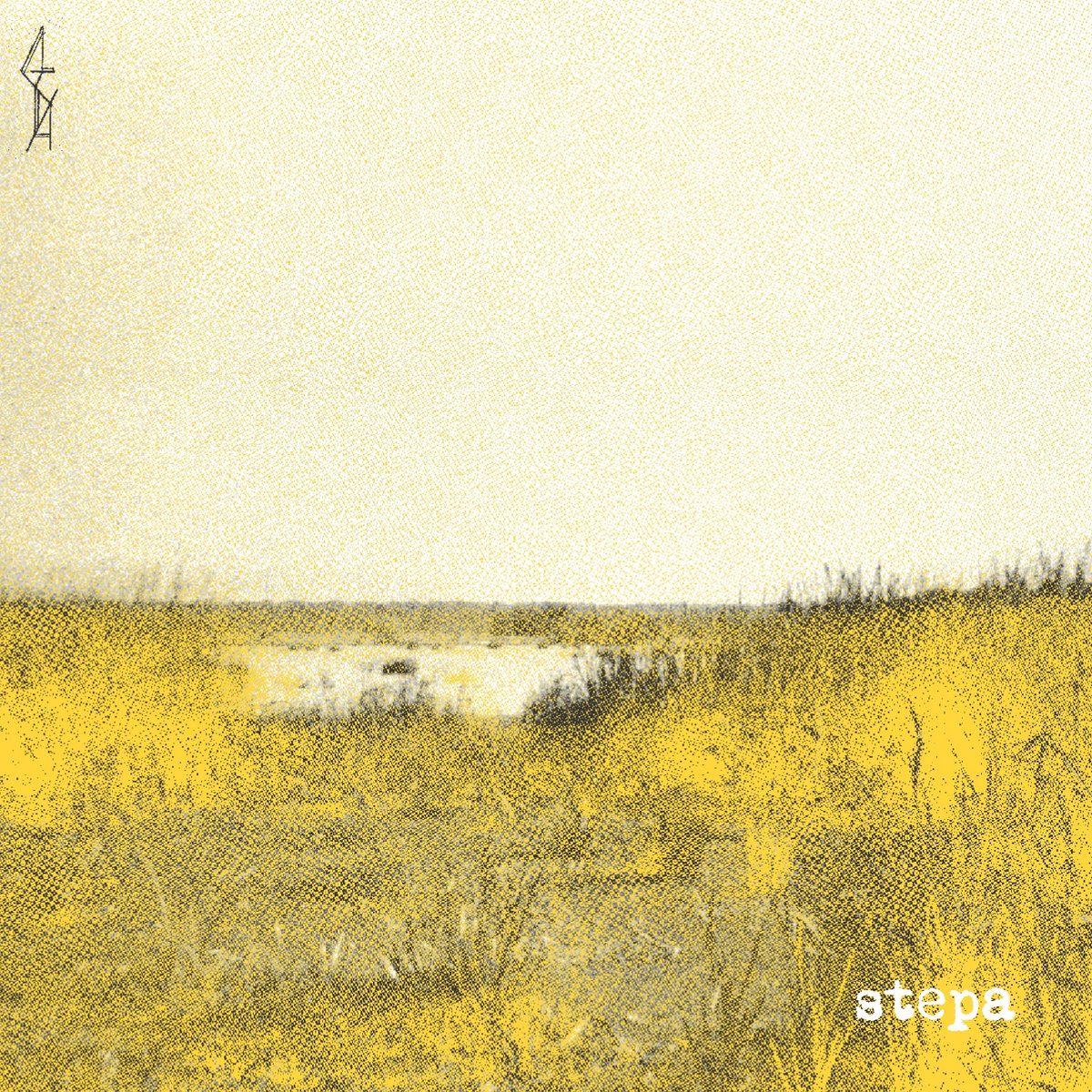
Every once in a while, a band appears briefly and burns out fast, leaving behind a single document of their existence so dense and chaotic it feels like a transmission from another realm. That band is Stepa.
Formed in 2020 in Novo Mesto, Slovenia, Stepa was a short-lived trio that only released one self-titled album, thirteen minutes of sheer dissonant fury. It was released on cassette via Quebec’s LeBlast Records, a fitting match given the label’s taste for sonic extremity.
Their style? Call it emoviolence. Call it grindcore. Call it whatever you want, but the result is a twelve-track onslaught where no song breaches the two-minute mark. The shortest, "Vrtača," clocks in at a mere 26 seconds, while the longest, "Hodnik," barely reaches two minutes but somehow feels massive.
This is music that doesn't beg for attention, it kicks the door down. Krempl’s guitar playing is like shards of broken math equations. Dissonant, fractured, and constantly mutating. Šiba's drumming is absurdly fast, channeling the relentless speed and stop-start chaos of bands like Honeywell or Usurp Synapse. And Želo’s vocals? Unhinged. It’s raw-throated desperation with zero restraint, like a flesh wound set to blast beats.
The highlight here is unquestionably "Hodnik", the closing instrumental. In a bold move, Stepa drops the vocals entirely and leans into dissonant chaos filtered through a start-stop rhythmic breakdown. It’s almost like the eye of the hurricane, if the hurricane had no eye. The mathy structures collapse into themselves and re-emerge, only to combust again. It’s unsettling, dynamic, and perfectly in line with what the genre’s more experimental edge they had to offer.
Stepa never stuck around to release a follow-up. No extensive touring. No cryptic new project hints. Just one record, some cassettes, and a whole lot of noise. But in those fifteen minutes, they delivered something Slovenia rarely sees: a band unafraid to go full chaos mode and leave it all in the wreckage.
------
S vremena na vreme pojavi se bend koji kratko zasvetli i brzo nestane, ostavivši iza sebe samo jedno izdanje: gusto, haotično i toliko posebno da zvuči kao da je stiglo iz nekog drugog sveta. Takva je bila Stepa.
Bend je nastao 2020. godine u Novom Mestu, Slovenija, i radio je kratko, tek dovoljno da snimi svoj jedini, istoimeni album. Trinaest minuta sirove energije i nesvakidašnjeg zvuka objavljeno je na kaseti preko kanadskog izdavača LeBlast Records iz Quebeca, poznatog po ljubavi prema DIY emo/screamo muzici.
Kako opisati njihov stil? Pa neko bi rekao emoviolence, neko grindcore, a istina je da je to dvanaest kratkih, žestokih pjesama, nijedna ne prelazi dve minute. Najkraća, "Vrtača", traje tek 26 sekundi, a najduža, "Hodnik", jedva dve minute, ali ipak ostavlja jak utisak.
Ovo je muzika koja ne traži pažnju, jer je ona jednostavno osvoji. Gitara Kremla oštro reže i stalno mijenja smjer, bubnjevi Šibe srljaju nezaustavljivim tempom, a vokal Žela donosi sirov i neispeglan naboj, kao da prenosi osećaj trenutka bez ikakvog filtera.
Poseban trenutak na albumu je "Hodnik", završna instrumentalna pjesma. Bez vokala, bend se prepušta igri ritma i disonantnih dionica koje se ruše i ponovo grade. Dinamično, nepredvidivo, i potpuno u skladu s njihovim eksperimentalnim pristupom.
Stepa nije imala nastavak priče, nije bilo novih izdanja, velikih turneja ili tajanstvenih najava. Samo jedan album, nekoliko kaseta i puno buke. Ipak, u tih petnaestak minuta ostavili su trag nečim što se kod nas rijetko čuje: bendom koji se usudio pustiti da ga haos vodi do kraja.
Members: Milica (vocals), Igor (guitar), Aljoša (guitar), Bojan (bass), Maksim (drums)
Related bands: Otih, Rahela Ferari
Labels: Good Samaritan Records, Castrato Records
FFO: Amygdala, Habak, Detestation, .fuckingcom, Cady, Drei Affen
Deer In The Headlights was a five-piece neocrust/screamo band from Banja Luka, Bosnia & Herzegovina. The band described themselves as “blackened crust.” It was formed by members of the defunct crust punk band Rahela Ferari (named after the Serbian actress).
Their first appearance was a 2010 split with Reflection of Internal Rain, from which some tracks were re-used on their demo EP a year later. Due to a dispute between bands, Deer In The Headlights eventually re-recorded their side in 2015.
In 2012, they dropped a 7" split with Croatian hardcore band Black Sails, supported by Good Samaritan Records. In 2013, they appeared on Dog Knights Productions’ Orchid Tribute Compilation, covering “36 Day Syndrome.”
Their self-titled debut EP was released in 2014 via Good Samaritan and Boslevan Records, followed by their second full-length, Mental Health, in 2016.
The band toured extensively across Europe during the 2010s, playing alongside regional peers such as Eaglehaslanded, Ponor, and Mališa Bahat, as well as international acts like Amygdala. They've performed at Fluff Fest a couple of times. After a long active period, the band eventually went on hiatus.
“Lately we’re trying to make a difference but it’s really hard because people are not so motivated. They’re not aiming at something bigger. In general, speaking about hardcore, there isn’t even a scene in Bosnia or the city where I live in. People are just trying to be mediocre and live their daily lives without expressing their full potential... but I guess that’s also because they don’t have money, which is their main concern”, said the vocalist Milicafor the DIY Conspiracy interview.
The band’s sociopolitical stance ran deep, inspired by both older anti-nationalist DIY efforts and the lived experience of post-war Bosnia.
“Luckily, people in my band are not that young so they are a great source of information to me because of their experience. They grew up in the old country of Yugoslavia and they have these experiences that we (the young people) can’t have... And definitely, people should unite and tear down the walls, they should push each other and join in some kind of force using their potential.”
“In some aspects, we see that happening. There are a lot of shows and connection between people from neighbouring countries, there are also festivals like Monte Paradiso in Croatia, and everything’s easier in general because of the internet. But of course, my view is kind of pessimistic, because the change I see is very slow... at your place everything’s kinda stagnating. That’s really frustrating.”
Despite this, Milica emphasized how vital it was to stay active and not let cynicism get in the way of purpose.
“The fact that we’re playing all these shows and making music is very important to us. A lot of people already know us and know what we’re doing. We shouldn’t glorify the people who are active in the scene or play in a band but to know for what the band is standing for and the ideas behind it. The way they’re doing things — like the fact that we’re a DIY band — most of the people are so away from the concept of making things and music just for the sake of solidarity. I think there’s no other way, especially for Balkan countries. We just have to work together.”
As for the state of things in Bosnia, especially in Republika Srpska (the Serbian entity), she didn’t hold back.
“Bosnia is a federation of two entities, the Federation of Bosnia and Herzegovina on one hand, and the Serbian part, Republika Srpska, on the other. In the Serbian part, there’s more conservative and aggressive politics prevailing... especially among young people — there are some really violent ones. There’s more money in the Federation and more things are finally happening there. Foreign people are coming more often, and the place is more open to new ideas.”
“What is tearing the state apart is the politicians. Those of the Serbian part are too much toward Serbia and Belgrade instead of focusing inward, on the people living here, like in Banja Luka... and the biggest problem is definitely corruption.”
After the band’s break, Igor (the drummer) started Otih, a post-punk/darkwave project during the COVID-19 pandemic, releasing a demo and a 7". However, there hasn’t been any update on a Deer In The Headlights reunion... at least, not yet.
When it comes to their music, I can't exactly pick a highlight from each release, solely because the entire discography is just too good. But what stands out to me is how it feels like a natural extension of their previous band, Rahela Ferari, gradually mutating into a more focused neocrust expression over the decade. Deer in the Headlights found a way to staple their pain and disillusionment into something tangible into art, especially in a place torn apart by two political entities. And i think their song 'OURS/THEIRS' says it best:
The nationalization of victims is a crime perpetuated by politicians. They thrive from a paranoid, delusional citizen, because being angry at your neighbor you forget you should be angry at them. Between 1992 and 1995 there was war in Bosnia that destroyed lives and families. The people living in Bosnia now are gravely affected by the consequences of that war. Instead of helping our people surpass the conflict by focusing on the future and teaching our children to look at the world with better eyes, the media powered by national politics still only serves as a tool for enraging people of different nations and religions against each other.
Не постоје наше и њихове жртве. Жртве су жртве.
(There are no such things as our victims and their victims. Victims are victims.)
It's the chaos, the tension, and the unresolved trauma that leaves you stunned, unable to move. Just like a deer in the headlights.
------
Deer In The Headlights je bio petočlani neocrust/screamo bend iz Banjaluke, Bosna i Hercegovina. Sami su sebe opisivali kao blackened crust. Nastali su od članova ugašenog crust punk benda Rahela Ferari (nazvanog po srpskoj glumici).
Prvo su se pojavili 2010. godine na split izdanju sa Reflection of Internal Rain, odakle su neke pesme kasnije prebačene na njihov demo EP iz 2011. Zbog nesuglasica među bendovima, Deer In The Headlights su svoju stranu ponovo snimili 2015.
Godine 2012. izdali su 7" split sa hrvatskim hardcore bendom Black Sails, u saradnji sa Good Samaritan Records. Učestvovali su 2013. na Orchid Tribute kompilaciji Dog Knights Productions-a, obradivši pesmu "36 Day Syndrome".
Debi EP Deer In The Headlights objavili su 2014. preko Good Samaritan i Boslevan Records, a drugi album Mental Health izašao je 2016. Bend je tokom 2010-ih intenzivno svirao po Evropi, delio binu sa regionalnim bendovima kao što su Eaglehaslanded, Ponor i Mališa Bahat, ali i sa međunarodnim imenima poput Amygdala. Nastupili su nekoliko puta na Fluff Festu. Nakon dužeg perioda aktivnosti, bend je otišao na pauzu.
Pevačica Milica je u intervjuu za DIY Conspiracy izjavila:
„U poslednje vreme pokušavamo da napravimo neku razliku, ali to je zaista teško jer ljudi nisu dovoljno motivisani. Ne teže ka nečemu većem. Generalno, što se hardkora tiče, u Bosni, pa ni u gradu gde ja živim, zapravo i ne postoji scena. Ljudi su prosto zadovoljni da ostanu prosečni i da vode svoje svakodnevne živote bez izražavanja svog punog potencijala... ali pretpostavljam da je to i zato što nemaju para, što im je glavna briga.“
Njihov društveno-politički stav bio je duboko ukorenjen, inspirisan starijim antinacionalističkim DIY naporima, ali i životnim iskustvom posleratne Bosne:
„Srećom, ljudi iz mog benda nisu toliko mladi, pa su mi oni veliki izvor informacija zahvaljujući svom iskustvu. Odrasli su u staroj zemlji, Jugoslaviji, i imaju ta iskustva koja mi mlađi ne možemo da imamo... I definitivno, ljudi bi trebalo da se ujedine i sruše zidove, da se guraju međusobno i udružuju u neku vrstu snage koristeći svoj potencijal.“
„U nekim aspektima to i viđamo. Ima dosta koncerata i povezivanja između ljudi iz susednih zemalja, postoje festivali poput Monte Paradisa u Hrvatskoj, i generalno je sve lakše zahvaljujući internetu. Ali naravno, moj pogled je pomalo pesimističan, jer su promene koje vidim veoma spore... kod vas sve nekako stagnira. To je baš frustrirajuće.“
Uprkos tome, Milica je naglasila koliko je važno ostati aktivan i ne dozvoliti cinizmu da uguši smisao:
„Činjenica da sviramo sve te svirke i pravimo muziku nama je jako bitna. Mnogi ljudi već znaju ko smo i šta radimo. Ne treba veličati ljude koji su aktivni u sceni ili sviraju u bendu, nego znati za šta se bend zalaže i koje ideje stoje iza toga. Način na koji se stvari rade — recimo to što smo mi DIY bend — većini ljudi je jako daleko od samog koncepta pravljenja muzike iz čiste solidarnosti. Mislim da za balkanske zemlje nema drugog puta. Prosto moramo da radimo zajedno.“
O stanju u Bosni, posebno u Republici Srpskoj, nije štedela reči:
„Bosna je federacija dva entiteta: Federacije Bosne i Hercegovine s jedne strane, i srpskog dela, Republike Srpske, s druge. U Republici Srpskoj preovlađuje konzervativnija i agresivnija politika... posebno među mladima — ima i dosta onih nasilnih. U Federaciji ima više para i konačno se dešava više stvari. Stranci sve češće dolaze i mesto je otvorenije za nove ideje.“
„Ono što uništava državu su političari. Oni iz Republike Srpske su previše okrenuti ka Srbiji i Beogradu, umesto da se fokusiraju na ljude koji ovde žive, kao u Banjaluci... a najveći problem je definitivno korupcija.“
Posle pauze, bubnjar Igor je tokom pandemije COVID-19 pokrenuo post-punk/darkwave projekat Otih, izdao demo i 7", ali za sada nema najava o povratku Deer In The Headlights-a.
Što se same muzike tiče, teško mi je da izdvojim vrhunac svakog izdanja — cela diskografija je jednostavno predobra. Ono što je posebno jeste što deluje kao prirodan nastavak onoga što su radili u Raheli Ferari, postepeno se preobražavajući u fokusiraniji neocrust izraz tokom decenije. Deer In The Headlights su uspeli da svoju bol i razočaranje pretvore u opipljivu umetnost, pogotovo u zemlji rastrgnutoj između dva politička entiteta. I mislim da njihova pesma "OURS/THEIRS" to najbolje kaže:
The nationalization of victims is a crime perpetuated by politicians. They thrive from a paranoid, delusional citizen, because being angry at your neighbor you forget you should be angry at them. Between 1992 and 1995 there was war in Bosnia that destroyed lives and families. The people living in Bosnia now are gravely affected by the consequences of that war. Instead of helping our people surpass the conflict by focusing on the future and teaching our children to look at the world with better eyes, the media powered by national politics still only serves as a tool for enraging people of different nations and religions against each other.
Не постоје наше и њихове жртве. Жртве су жртве.
Haos, tenzija i nerazrešena trauma ostavljaju vas zatečenima, nesposobnima da se pomerite. Baš kao jelen u farovima.
Related bands: Ha Det Bra, Kiper, Lunar, Man in the Shadow, Schmrtz teatar
FFO: Assay, At The Drive-In, Cursive, Eldritch Anisette, Envy, Life... But How To Live It?, Lvmen, Petrograd, Portraits of Past, Refused, Still Life, Sed Non Satiata, Undone
In recent years, I’ve been looping Inconstantinopolis during drives to my language lessons. With each listen, it grew on me, enough to finally write about this legendary band.
Analena is a female-fronted band that shares members from Croatia and Slovenia. The term ANALENA comes from the ancient Sanskrit, and translates as "like/by the fire". Analena was founded in Zagreb in 1997 by Mijo, Zet, and Six. Their first vocalist was Irena, before Ana joined as the permanent singer a year later. Miran - associated with Moonlee Records, the defunct emocore band Man in the Shadow, and the 13.brat zine- joined as guitarist in 2003. Six left in 2006. After a period with a substitute bassist, Ana eventually took on bass duties herself, solidifying a lineup that remains unchanged to this day.
According to the DIY Conspiracy interview, Mirjan stated that "there were many punk bands with anti-war and anti-nationalistic message at that time, but there were also »punk« bands that promoted nationalistic ideas" and also mentioned a 1996 7" compilation “Preko zidova nacionalizma i rata” (Against the walls of nationalism and war), furthering the idea that nationalism in the region can and should be overcome.
Beyond touring Croatia and Slovenia, they performed across Europe, including appearances at major festivals like the now-defunct Fluff Fest in the Czech Republic.
They recorded their 4-track demo tape in 1999 and their debut album 'Arythmetics' (first as a 7" EP, then as a CD with a few additional tracks) and a split with the legendary Serbian hardcore band .Unison. in 2001. In 2002, they would eventually release a split with Austrian screamo band Sensual Love titled 'It's Never Too Late To Split Up'. In 2004, they've released their second studio album 'Carbon Based' and their third album 'Inconstantinopolis' in 2009, both supported by the amazing Moonlee Records.
Their sound spans the fiery energy of punk, the bittersweet bursts of emo/screamo, and the steadier pulse of post-punk, especially prominent in their later work. They’re unafraid to experiment with post-hardcore’s inherent fluidity. Their lyrics are often abstract, surreal and minimalist (instead of upfront revolutionary slogans that hardcore punk is known for), with which repetition often emphasises their words. They deal with topics like personal freedom, existentialism and individuality. Ana's vocals often range from spoken word, clean vocals and screaming, often accompanied by Mijo's desperate shouting, akin to Ian MacKaye's.
In a region often defined by machismo, nationalism, and post-war nihilism, Analena stood as something fiercely different. They weren’t just another screamo band—they were a transnational, feminist, emotionally literate force in a scene still struggling with old-school hardcore masculinity. Their presence (particularly Ana’s vocals and lyrics) disrupted the norm, and invited something more vulnerable, poetic, and politically fluid.
While many ex-Yu hardcore bands screamed about injustice in the most literal way possible, Analena's lyricism felt elliptical, surreal, less didactic, more introspective. This didn’t weaken their impact, it made it deeper. Where other bands offered slogans, Analena offered open-ended wounds. And crucially, they weren’t a band trapped in the Balkans—they moved. Toured. Collaborated. Released through Moonlee. Played Fluff. Their ambition didn’t betray their DIY ethics—it redefined them for a post-war generation. If Unison was the voice of Serbian resistance, Analena was the crooked lullaby sung from the borderlines of Croatia and Slovenia.
Rather than reviewing every release, I’ll highlight my personal favorites from each album.
The eponymous title track from their debut 'Arhythmetics' already blasts off with heavy, passionate and raw production much akin to Eldritch Anisette, with enough hooks and harmonies catchy enough to get enticed. Although Ana’s vocals are mostly clean, she unleashes relentless rage in 'So Real', heightening the bittersweet devastation of the songwriting, a callback to classic ’90s screamo.
Taken from the split with .Unison., 'The Bow & The Arrow' allows the bittersweet melodies flourish while Ana interpolates with Mijo as they sing and shout. My favorite takeaway is the quiet bridge where she sings 'Concentrate, concentrate' before shrieking mid-silence 'RELEASE!' That to me was the most cathartic moment from the split.
'The Metaphorical Approach' from 'It's Never Too Late To Split Up' is probably the most skramziest of all in just 2:50 minutes, almost bordering on the Funeral Diner and Portraits of Past, exactly essential for their existential turmoil. The lyrics read:
The first three minutes were great just like the beginning of the universe but then in the end we'll all go up in flames. Just like fire. Yes, it will probably happen again. My history repeats itself. Yes, I will do it again. I will spin in the wrong way. A coward dies a thousand times.
That last line really hit deep. Given that Analena is one of the few Ex-Yu bands with feminist roots, the quote might be flipped on its head: we die a thousand times because we’re forced to suppress vulnerability, again and again.
Onto their next album 'Carbon Based', 'Carbon Based Organisms' kicks off fiery screamo with minimalist poetry on individuality and 'Dream Amplifiers' give out their bittersweet take on empty idealism, demanding that 'we need dream amplifiers to make it louder, so they can feel it in their bones', despite that 'still, the world is grey', concluding that even if we 'pave with good intentions'. It's a critical take on naïve optimism. 'Notturno' takes it further and deeper with Still Life's devastating essence, almost on a depressive level. The lyric, though very short, reads almost like a mantra: How deep is this night? Don’t look down. Jump. Leave your fears behind. It's a powerful minimalist piece that is often ambiguous - definitely up for personal interpretation.
And lastly, 'Inconstantinopolis' opens with the deceptively upbeat post-punk groove of 108: Cedar Calling Down. I say “upbeat,” but the lyrics suggest otherwise...: As i rise/higher and higher/Into the calm blue embrace/I swear i can feel it expanding/But i see no god up here'
On 'Off With My Head', steady drums correlated with guitars/bass in a quasi math-rock fashion, gradually unraveling into 'Refused' territory. My favourite part being the bridge part right after the chorus, where the entire band screams 'Off with my head' repeatedly - as if from the distance, which further enhances the intensity.
Without further ado, i'll conclude this review with Miran's words from that interview:
"To question everything, to make your mind, »to focus the camera on yourself«, to stand up, to be yourself, to be responsible in your irresponsibility, to live a life worth living. »To see the colours behind Violet. To walk out of the frames. To wash off the lies. To cross the line. Cross the line. To live. To die no more.« And it made us the persons we are today, and we are happy about it."
-----------
Poslednjih godina često sam vrtio Inconstantinopolis dok sam išao na časove jezika. Svakim slušanjem mi je sve više ulazila pod kožu — dovoljno da napokon napišem nešto o ovom legendarnom bendu.
Analena je bend sa ženskim vokalom koji okuplja članove iz Hrvatske i Slovenije. Ime Analena potiče iz starog sanskrita i prevodi se kao „kao/pored vatre“. Bend je osnovan u Zagrebu 1997. godine od strane Mije, Zeta i Sixa. Prva pevačica bila je Irena, pre nego što se Ana pridružila godinu dana kasnije i postala stalni vokal. Miran — povezan sa Moonlee Records-om, bivšim emocore bendom Man in the Shadow i fanzinom 13.brat — priključuje se kao gitarista 2003. godine. Six odlazi 2006, a posle kraćeg perioda sa privremenim basistom, Ana preuzima i bas, čime se formira postava koja i danas traje.
U intervjuu za DIY Conspiracy, Miran je rekao:
„Tada je bilo mnogo pank bendova sa antiratnom i antinacionalističkom porukom, ali je bilo i ‘pank’ bendova koji su promovisali nacionalističke ideje.“
On je pomenuo i kompilaciju iz 1996. Preko zidova nacionalizma i rata, naglašavajući da se nacionalizam u regionu može i treba prevazići.
Pored koncerata u Hrvatskoj i Sloveniji, svirali su širom Evrope, uključujući nastupe na velikim festivalima poput sada ugašenog Fluff Festa u Češkoj.
Njihova demo kaseta od 4 pesme izlazi 1999, a zatim i debi album Arythmetics (prvo kao 7", a potom na CD-u sa dodatnim pesmama), kao i split sa legendarnim srpskim hardcore bendom .Unison. 2001. godine. Sledeće godine objavljuju split sa austrijskim screamo bendom Sensual Love, pod nazivom It’s Never Too Late To Split Up. Drugi album, Carbon Based, izlazi 2004, dok treći, Inconstantinopolis, izlazi 2009. godine, oba pod okriljem Moonlee Records.
Njihov zvuk obuhvata sirovu energiju panka, emotivne erupcije emoa/screamoa i postojaniji puls post-punka, posebno izražen u kasnijim radovima. Ne plaše se da eksperimentišu fluidnošću post-hardcora. Tekstovi su često apstraktni, minimalistički i nadrealni — umesto direktnih parola koje hardcore tradicionalno koristi. Tematski se bave slobodom, egzistencijom i individualizmom. Anin vokal varira od spoken word-a, čistog pevanja, do vriskova, često kontrastiran Mijinim očajničkim povicima, u stilu Iana MacKaye-a.
U regionu koji se i dalje definiše kroz mačizam, nacionalizam i postratni nihilizam, Analena je stajala kao nešto radikalno drugačije. Nisu bili „samo još jedan screamo bend“ — već transnacionalna, feministička, emotivno pismena sila u sceni gde je još uvek dominirala old school hardcore muževnost. Njihovo prisustvo (posebno Anini tekstovi i vokali) remetilo je norme i unosilo nešto ranjivije, poetskije, politički fluidnije.
Dok su mnogi ex-Yu hardcore bendovi vrištali o nepravdi u što direktnijem obliku, Analena je nudila tekstove koji su bili eliptični, nadrealni, introspektivni. Time njihov uticaj nije bio oslabljen — već produbljen. Dok su drugi nudili parole, oni su nudili otvorene rane. A što je možda najvažnije — nisu bili bend ograničen Balkanom: svirali su, sarađivali, objavljivali preko Moonlee-a, nastupali na Fluffu. Njihova ambicija nije izdavala DIY etiku — redefinisala ju je za posleratnu generaciju. Ako je Unison bio glas srpskog otpora, Analena je bila kriva uspavanka sa granice Hrvatske i Slovenije.
Moji lični favoriti:
Sa debija Arythmetics, naslovna numera odmah kreće sa sirovom, strastvenom produkcijom nalik Eldritch Anisette, dok 'So Real' otvara prostor za Anin bes, koji pojačava gorčinu i devastaciju pesme, podsećajući na klasični ’90s screamo.
Sa split-a sa .Unison., 'The Bow & The Arrow' kombinuje melodičnost i intenzitet, sa prelepim tihim mostom gde Ana peva “Concentrate, concentrate” pre nego što vrisne “RELEASE!” — jedan od najkatarzičnijih trenutaka celog split-a.
Sa It’s Never Too Late To Split Up, numera 'The Metaphorical Approach' donosi najskramzije momente za samo 2:50, na ivici Funeral Diner-a i Portraits of Past. Tekst glasi:
The first three minutes were great just like the beginning of the universe
but then in the end we'll all go up in flames.
Just like fire.
Yes, it will probably happen again.
My history repeats itself.
Yes, I will do it again.
I will spin in the wrong way.
A coward dies a thousand times.
Taj poslednji stih posebno odjekuje — u kontekstu feminističkih korena benda, mogao bi da se preokrene: umiremo hiljadu puta jer smo prinuđeni da potiskujemo ranjivost iznova i iznova.
Na Carbon Based, numera 'Carbon Based Organisms' donosi minimalističku poeziju o individualizmu, dok 'Dream Amplifiers' kritikuje naivni idealizam zahtevajući “we need dream amplifiers to make it louder, so they can feel it in their bones”, ali zaključuje da je “still, the world is grey”. 'Notturno' odlazi još dublje u introspektivu, nalik na Still Life, sa gotovo depresivnim mantričnim stihom: How deep is this night? Don’t look down. Jump. Leave your fears behind.
Na Inconstantinopolis-u, '108: Cedar Calling Down' otvara album lažno optimističnim post-punk groove-om, dok tekst poručuje: As I rise / higher and higher / Into the calm blue embrace / I swear I can feel it expanding / But I see no god up here. 'Off With My Head' se gradi u quasi-math rock maniru, razbijajući se u Refused teritoriju, a najjači deo je most kada ceo bend urla “Off with my head” u daljini — efekat koji samo pojačava intenzitet.
Na kraju, prepustiću završnu reč Miranu iz tog intervjua:
„Propitkivati sve, misliti svojom glavom, »fokusirati kameru na sebe«, ustati, biti svoj, biti odgovoran u svojoj neodgovornosti, živeti život vredan življenja. »Videti boje iza Violet. Izaći iz okvira. Sprati laži. Preći granicu. Preći granicu. Živeti. Ne umirati više.« To nas je učinilo osobama kakve smo danas, i srećni smo zbog toga.“
Members: Damjan Vitorović, Luka Lazarević, Matija Ilić, Relja Blagojević
Related bands: ????
FFO: Free Throw, Joyce Manor, The World Is A Beautiful Place, Snowing, Casper Elgin
I've following this band for quite some time now and it is about time that they've released an official debut EP for us to hear. Before that, lemme tell you all on how i found out about this Belgrade-based band from the beginning.
Photo by me
Back in 2022, the frontman guitartist/vocalist Luka dropped a two-track EP 'avgust' under the moniker Luch0 on Bandcamp. The tracks in question are instrumental math-rock/post-hardcore demonstration of his skills. At the time adding it to my list, i didn't realize that he was connected to the Butlers until he contacted me via their IG page. He was admittedly surprised and validated to find his stuff on there, given that he completely forgot about the project. That’s how far back this band quietly existed in the background, slowly crafting something more solid.
Anyway, Ubili su Batlera (trans. They killed the butler) was founded in 2021. They shared demos around YT or somewhere else and started performing around 2022. I actually had the luck to see them twice while reporting the gigs on here in between January and February 2024, especially when they released their first track 'Utorkom, ponekad' (trans. Sometimes on Tuesdays), as part of Hali Gali Kompilacija Vol. 2.
That track alone was a standout. A booming bassline leads the way, with swirls of guitar drenched in emotional nuance. The vocals walk the tightrope between anguish and resignation, held together by steady, deliberate drums. The lyrics hover between existential dread and emotional loyalty:
“U svojoj glavi držim eter a u rukama prazninu,”
“Biću tvoj nezaposleni ortak utorkom Biću tvoj poslednji pas u trci s vremenom.”
Then the breaking point:
“Ovde nema nikog Nikog osim nas...”
It’s an anthem for those fighting quiet battles, trying to make presence mean something again.
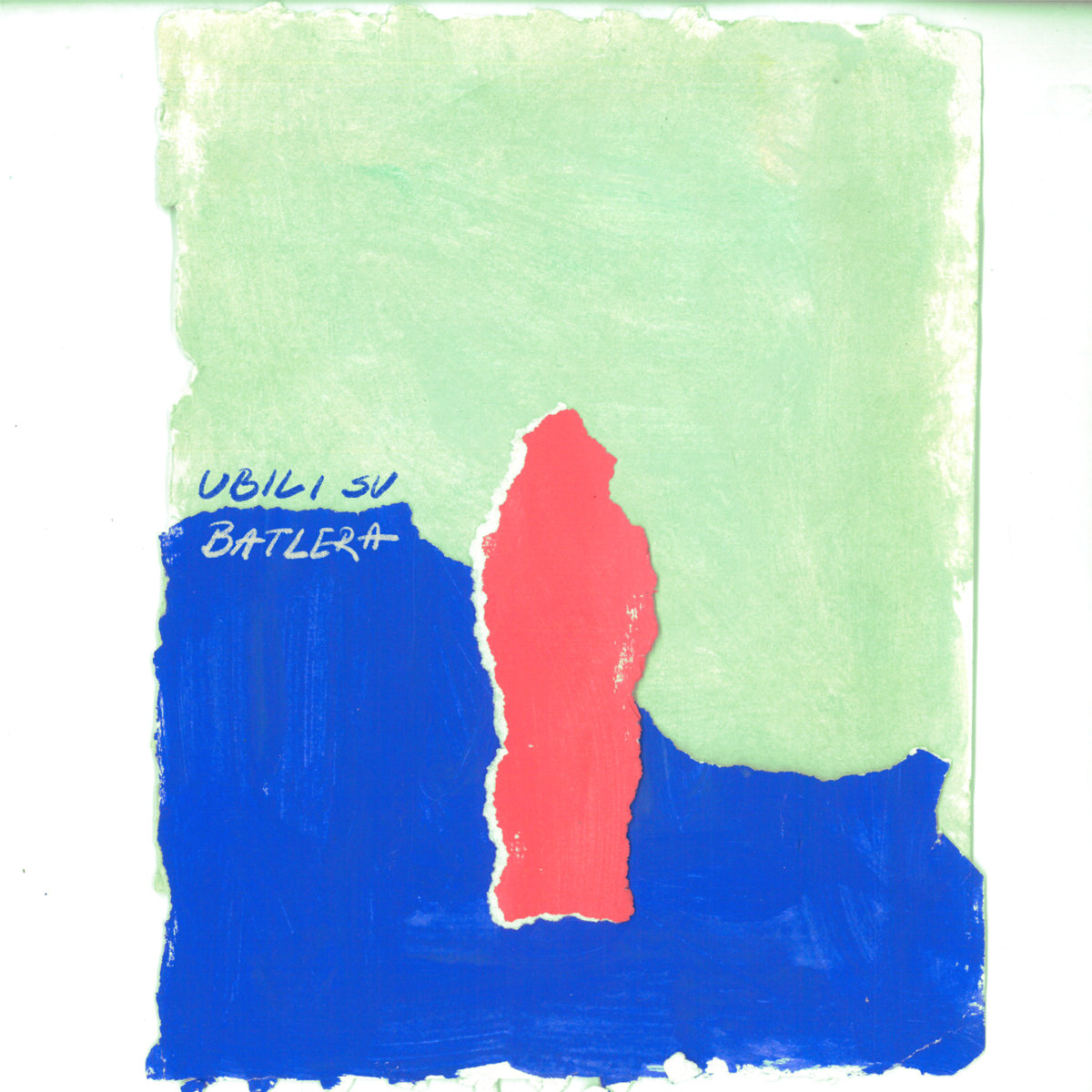
Now, fast forward to May 2025: the band drops their long-awaited self-titled EP, recorded between February and March at Down There Studio, with cover artwork by Milica Berić.
Its opener 'Novi Svet' gets the listeners hyped up in pure 'Twinkle Daddies' fashion, only 1:40 long, but it delivers that punchy, glittering introduction. It only continues with 'Smrt i Filozofije Palanke', merging twinkly guitars with pop punk elements and catchy hooks. My favorite being the next track 'Jedan! Dva!! Tri!!!' where the melody gets more infectious and It hits with a stream-of-consciousness urgency, pairing emotional volatility with vivid summer imagery:
“Opet samoća
I ideje koje stvorilo je avgustovsko sunce”
“Svaka reč će
na julskom suncu da ispari.”
Even lines like this carry a poetic weight that feels honest and unfiltered:
“I svaki korak koji naprave
ove ofucane patike
u jednom smeru vode me
Bez cilja, ali iz potrebe”
The last one being the alt-rock-ish 'Ko Nema u Glavi¿' where things seem to slow down a little, going straight to the alt. rock route. Think Dinosaur Jr. if filtered through a modern emo lens, less about fuzz and more about that 90s brand of youthful burnout. The unexpected trumpet adds a sense of dramatic finality that works way better than expected.
In 2026, they dropped their second EP Idemo dalje (trans. “Let’s Move On”) in mid-March. The release features four new tracks, some of which include guest appearances from Snoudrop and Bo, along with a cover of the cult classic “Samo ponekad” by the legendary Jarboli.
A further evolution of their songwriting is evident here, with arrangements that feel more eclectic than before. Tight, adrenaline-charged instrumentation is paired with half-screamed, high-pitched vocals and infectious melodies that push their sound forward while keeping its emotional urgency intact.
While many bands from this region tend to lean on trendy aesthetics without depth, Ubili su Batlera are a rare exception. Their music isn’t just stylish—it’s deeply lived-in. There’s an authenticity in their writing that makes them feel essential. They're in fact one of the few bands, whose songwritings actually carry justice in an otherwise the quasi 'emo-free' region.
----------
Pratim ovaj bend već neko vreme i došao je trenutak da konačno imamo njihov zvanični debi EP pred sobom. Ali hajde prvo da ispričam kako sam ih uopšte otkrio.
Još 2022. godine, frontmen Luka (gitara/vokal) izbacio je dvotrekovni EP avgust pod pseudonimom Luch0 na Bandcampu. Te stvari su bile instrumentalni math-rock/post-hardcore showcase njegovih veština. Kad sam ih dodao na listu, nisam ni kapirao da ima veze sa Batlerima, dok mi se nije javio preko njihovog Instagram naloga. Bio je prijatno iznenađen i pomalo oduševljen što sam iskopao taj materijal, jer je i sam bio zaboravio na njega. To vam govori koliko je ova priča tinjala dugo u pozadini, dok nisu sklopili nešto ozbiljnije.
Ubili su Batlera (prev. They killed the butler) nastali su 2021. godine. Demosi su kružili po YouTube-u i ko zna gde sve, a svirke su krenule 2022. Imao sam sreće da ih vidim dva puta uživo, u januaru i februaru 2024, dok sam izveštavao sa koncerata – taman u trenutku kada su izbacili prvu pesmu Utorkom, ponekad, kao deo Hali Gali Kompilacije Vol. 2.
Ta stvar je odmah iskočila. Bas otvara, ogroman i pulsirajući, oko njega gitare pune emotivnih nijansi, dok vokali balansiraju između rezignacije i očaja, a bubnjevi ih drže čvrsto i promišljeno. Tekstovi lebde negde između egzistencijalnog očaja i odane bliskosti:
“U svojoj glavi držim eter
a u rukama prazninu,”
“Biću tvoj nezaposleni ortak utorkom
Biću tvoj poslednji pas u trci s vremenom.”
Pa onda kulminacija:
“Ovde nema nikog
Nikog osim nas...”
Himna za sve one tihe borce koji pokušavaju da povrate smisao samim svojim postojanjem.
Fast forward – maj 2025. Bend konačno izbacuje istoimeni EP snimljen u februaru i martu u Down There Studio, sa omotom Milice Berić.
Otvara ga Novi svet – čisti “Twinkle Daddies” momenat. Kratko, 1:40, ali direktno u čelo, svetlucavo i energično. Sledeća, Smrt i filozofije palanke, prepliće twinkly gitare sa pop-punk elementima i zaraznim refrenima. Meni lično favorit dolazi odmah posle – Jedan! Dva!! Tri!!!. Melodija tu kulminira, sa stream-of-consciousness urgencijom, ljetnjim slikama i emotivnim haosom:
“Opet samoća
I ideje koje stvorilo je avgustovsko sunce”
“Svaka reč će
na julskom suncu da ispari.”
Čak i jednostavne slike nose težinu:
“I svaki korak koji naprave
ove ofucane patike
u jednom smeru vode me
Bez cilja, ali iz potrebe.”
Poslednja stvar, Ko nema u glavi¿, vuče više na alt-rock, malo usporenija, kao da svesno pravi otklon. Pomišljaš na Dinosaur Jr. kroz savremeni emo filter – manje fuzz-a, više tog ’90s osećaja mladalačkog sagorevanja. Truba u završnici je potpuno neočekivana, ali daje pesmi teatralan kraj koji legne savršeno.
Godine 2026, objavili su svoj drugi EP „Idemo dalje“ sredinom marta. Izdanje sadrži četiri nove numere, od kojih neke uključuju gostovanja Snoudropa i Boa, zajedno sa obradom kultnog klasika „Samo ponekad“ legendarnog Jarbola.
Dalja evolucija njihovog pisanja pesama je ovde očigledna, sa aranžmanima koji deluju eklektičnije nego ranije. Čvrsta, adrenalinom nabijena instrumentacija uparena je sa polu-vrištavim, visokim vokalima i zaraznim melodijama koje guraju njihov zvuk napred, a istovremeno zadržavaju njegovu emocionalnu hitnost netaknutom.
Za razliku od mnogih bendova iz regiona koji često skliznu u estetiku bez suštine, Ubili su Batlera odišu autentičnošću. Njihove pesme nisu samo “stajliš” – one se osećaju proživljeno. Njihov songwriting ima težinu, iskrenost i smisao, nešto što retko ko u ovoj kvazi “emo-free” zoni ume da ponudi.
FFO: Dashboard Confessional, Senses Fail, The Starting Line, Taking Back Sunday, Pidgeon
Zombie Animal is a Belgrade-based collaborative project led by Boris Milić, founded back in 1999. Their only album, simply titled Milić, was finally released in 2006 after a lengthy recording period between 2002 and 2004. Milić handled all the instruments and arrangements, while Tina Stupar contributed most of the vocals.
The album features 13 original songs and a Senses Fail cover, spanning a total runtime of 57 minutes. Musically, Zombie Animal falls somewhere between midwest emo and alternative rock. For example, the opener "Shining Mask" begins with a gentle, warm flow before launching headfirst into pop-punk territory. Stupar’s polished vocals — perhaps a little too smooth for the rawness pop-punk usually demands, are nevertheless catchy and invite listeners to sing along.
Another standout is "Trap-free", featuring Andrija Spičanović of 36 Daggers on guest vocals. While the production does feel somewhat dated by today's standards, it fits the album’s emocore sensibility, think Jawbreaker or Ashes rather than studio-polished mainstream emo. Tracks like "This Emptiness Hangs Heavy" even flirt with dream pop textures, showing surprising versatility.
Lyrically, the album deals with existential crises, the search for identity, societal alienation, and finding ways to survive in a world full of chaos, lies, and hollow values. Interestingly, the upbeat instrumentals often contrast with the dark thematic undercurrents, giving the record an almost bittersweet feeling.
That said, the album’s lengthy runtime can drag at points, and some songs start to blur together. It's not a tight or urgent listen, unless you’re joyriding with this CD on full blast, in which case it becomes a surprisingly pleasant, nostalgic soundtrack.
------------
Zombie Animal je beogradski kolaborativni projekat koji je 1999. godine pokrenuo Boris Milić. Njihov jedini album, jednostavno nazvan Milić, ugledao je svetlo dana tek 2006, nakon dugotrajnog snimanja između 2002. i 2004. Milić je sam odradio sve instrumente i aranžmane, dok je vokale u najvećoj meri donela Tina Stupar.
Album broji 13 originalnih pesama i jedan cover (Senses Fail), u ukupnom trajanju od skoro sat vremena. Zvukovno, Zombie Animal se kreće negde između midwest emo-a i alternativnog rocka. Već prva stvar, Shining Mask, otvara se nežnim, toplim uvodom, da bi se potom preokrenula u pop-punk pravcu. Stuparin glas je ispeglan, možda i previše gladak za sirovost kakvu taj žanr obično traži, ali i dalje dovoljno zarazan da povuče slušaoca na pevanje.
Poseban trenutak je Trap-free, gde gostuje Andrija Spičanović iz 36 Daggers. Produkcija danas zvuči pomalo zastarelo, ali zapravo se savršeno uklapa u emocore senzibilitet – bliže Jawbreaker ili Ashes nego studijski ispoliranim emo mainstream bendovima. Na mestima, kao u This Emptiness Hangs Heavy, bend čak koketira sa dream pop teksturama, pokazujući neočekivanu širinu.
Tematski, album se bavi egzistencijalnim krizama, potragom za identitetom, osećajem otuđenja u društvu i pokušajima da se opstane u svetu prepunom haosa, laži i šupljih vrednosti. Zanimljivo je da često vedra i melodična instrumentalna podloga kontrastira sa mračnijim lirskim nitima, dajući celini neku vrstu gorko-slatkog osećaja.
Ipak, dugačak format ume da bude zamoran – pesme povremeno počinju da liče jedna na drugu, pa slušanje u kontinuitetu zna da se razvlači. Ovo nije album koji nosi snagom urgentnosti, već više soundtrack za kasnu vožnju kolima, kad pustiš CD do kraja i prepustiš se nostalgičnom vajbu.